

Color Psychology in Branding
What the science actually says — and what it means for your brand.
Pablo Picasso once said that colors, like features, follow changes of the emotions. That observation is more than poetic. Decades of research in psychology and consumer behavior have given it empirical weight, and the implications for how brands communicate are significant.
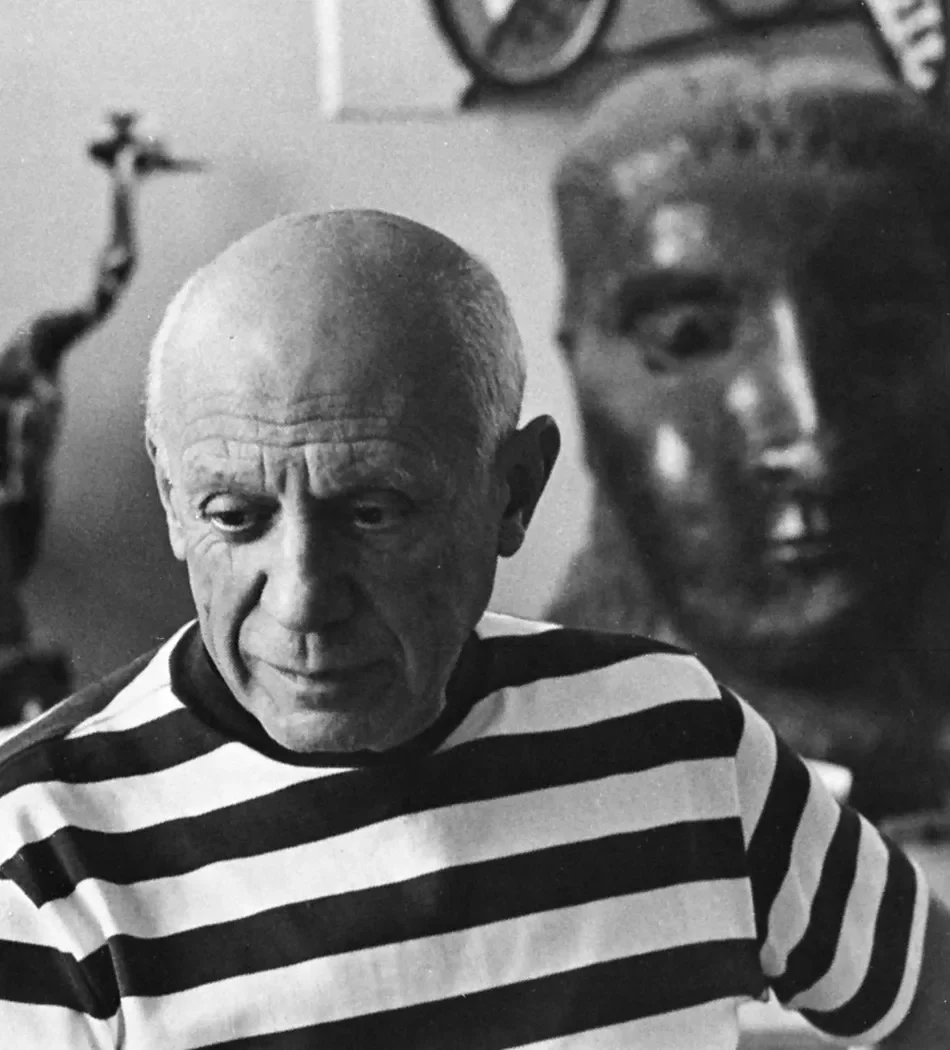
Pablo Picasso once stated that color can influence our emotions.
What color psychology actually is
Color psychology is the study of how colors influence human emotions, mood, and behavior. The general patterns are reasonably well-established. Warm tones — reds, oranges, yellows — tend to activate and stimulate. They can evoke feelings of warmth, energy, or urgency, but also anger and agitation depending on context and saturation. Cool tones — blues, greens, purples — tend to calm and recede. They're associated with serenity, trust, and sadness in different situations.
What's worth noting is how quickly these responses form. Color is processed pre-attentively, meaning the brain registers it before conscious attention is directed anywhere. By the time a visitor is reading your headline, the emotional register your color palette set has already done its work.
Color is processed before conscious attention arrives. The emotional tone is set before a single word gets read.
conscious
What the research shows
A 2020 cross-cultural study examined color-emotion associations across 30 countries and found meaningful universal patterns alongside significant cultural variation. Close to 70% of respondents associated red with love. More than half associated black with sadness and yellow with joy. White was linked to relief, and brown — perhaps surprisingly — was most consistently linked to disgust.
These universal associations are useful starting points. They suggest a baseline emotional vocabulary that color can draw from. But the same study also showed that cultural context modulates these responses considerably, which matters enormously for any brand operating across markets.
Source: Jonauskaite et al., "Universal Patterns in Color-Emotion Associations Are Further Shaped by Linguistic and Geographic Proximity," Psychological Science, 2020
Cultural context is not optional
Red is perhaps the clearest illustration of why cultural context matters. In many Western markets it signals danger, alertness, or financial loss — the origin of the phrase "in the red." In China, red carries the opposite meaning: prosperity, celebration, and good fortune. The same colour, processed through different cultural filters, produces almost entirely opposite associations.
White and black follow comparable patterns. White signals purity and innocence across much of Europe and North America, but is closely associated with mourning and death in many Asian cultures. Black is linked to death in much of the Western world, yet in several African cultures it represents wisdom, maturity, and spiritual depth.
For brands operating across regions, this is strategic rather than cosmetic. A colour that communicates trust and optimism in one market may communicate loss or mourning in another. Getting this wrong doesn't just reduce effectiveness — it can actively damage the credibility and emotional connection a brand is trying to build.
How color shapes perception before a product is evaluated
Consider Whole Foods. The brand relies heavily on green across its identity, its signage, its packaging, and its store environments. That palette taps into widely held associations with freshness, health, and environmental responsibility. Shoppers form expectations about product quality and nutritional value before they've read a single label. The color does preparatory work that the product then either confirms or disappoints.
This is the mechanism that makes color psychologically powerful in branding: it shapes expectation. Researcher Aradhna Krishna at the University of Michigan has studied how sensory elements, including color, prime consumers to expect certain product qualities. When the product experience matches those primed expectations, satisfaction goes up. When it doesn't, the mismatch creates a kind of cognitive friction that erodes trust.
This means that color choice is not just about how a brand looks. It's about the implicit promises a brand makes before anyone has consciously decided to pay attention.
Source: Krishna, A., "An integrative review of sensory marketing," Journal of Consumer Psychology, 2012
Color sets expectations. When the product matches them, trust builds. When it doesn't, the mismatch is felt even if it can't be named.
What different color choices signal in practice
Financial institutions have converged on blue for decades, and with good reason. Research consistently links blue to perceptions of competence, stability, and trustworthiness — precisely the attributes a bank or insurance company needs to project. It's not coincidence that HSBC, JPMorgan, Barclays, and American Express all lean heavily on the same part of the spectrum.
Luxury brands tend toward deep, saturated tones paired with gold or silver. The palette communicates scarcity and exclusivity, drawing on associations between richness of color and richness in value. Tiffany's robin's egg blue is a useful case: the specific shade is so tightly managed and consistently applied that the color alone, without any wordmark, triggers brand recognition and the emotional associations that come with it.
Technology companies, particularly startups, have historically favored bold, high-contrast palettes. The signal is energy, innovation, and directness — a visual shorthand for "we move fast and don't apologize for it." The current drift toward softer, more muted palettes in tech branding reflects a shift in what those companies want to project: accessibility, approachability, and calm confidence rather than aggressive disruption.
These aren't aesthetic preferences. They are calculated positioning decisions expressed through visual means.
The limits of what color can do
It's worth being precise about what color psychology can and cannot deliver. Color can prime emotional states and shape first impressions. It can reinforce a brand's positioning when it's used consistently. It can also undermine that positioning when it's used inconsistently or when it conflicts with what the product actually delivers.
What it cannot do is substitute for the brand itself. A poorly run business with an beautifully considered color palette is still a poorly run business. Color accelerates perception — both in the positive direction and the negative one. If the underlying product or service experience doesn't hold up, a strong visual identity simply means customers form their disappointment faster and remember the brand more vividly when they warn others about it.
Used with that understanding, color is one of the most efficient tools available to a brand. It communicates before language can, at a speed the conscious mind hasn't caught up to yet. That's not a small thing. It just needs to be in service of something real.